
Mix Guide: Best Bass Compression Settings (2025)
Published · Updated
- Music
The perfect mix can make or break a song. And if there’s one thing that demands attention in a mix, it’s the low end. It’s the one area that can ruin your mix if it’s not balanced.
I’m excited to share my insights on achieving the best bass compression settings for a well-balanced, impactful mix.
I’ve spent countless mixing projects in my composition and production projects. The low end, without exception, must be handled right, or the whole track will lack energy and punch.
Nailing the bass tone is crucial for creating that sonic sweet spot that makes your music resonate with listeners.
The latest technology developments in music mean there are more great compressor plugins available today than ever before. But the principals of bass compression are the same whether you're using a hardware unit from the 60's or the latest compression plugin from today.
For music producers, both seasoned and new, mastering the relationship between the kick drum and bass track is an essential skill. It provides a solid foundation for your music and adds depth and character.
In this comprehensive guide, we’ll dive into the nitty-gritty of bass compression and explore techniques to help you find the perfect balance for your mix.
Mastering the Art of Best Bass Compression Settings for a Well-Balanced Mix
The perfect bass mix depends on several factors; the style of music, the type of bass instrument, and the kick drum sound. All three elements are vital in determining your project’s ideal compression settings.
There are some essential concepts and techniques you need to master in order to achieve that perfect bass mix:
You'll need to learn the intricacies of release time, make-up gain, dynamic range, and parallel and sidechain compression.
Once you have the basic listening skills for these concepts, you can make informed decisions about when and how to adjust your bass compressor settings.
Preferences Over Presets
Bass compression settings differ depending on the situation; when playing live, settings typically differ from when producing a track in a studio.
There’s also no one-size-fits-all approach to bass compression; there are as many different ways of compressing the bass as there are producers.
Sometimes, experimenting with various compressors and techniques can lead to a more consistent and powerful bass sound.
The bass can be compressed during the performance or recording by using a bass compressor pedal.
A producer might use multiband compression in his Digital Audio Workstation (DAW) session. However, the compressors in both situations have the same basic settings: attack and release times, compression ratios, and frequency range selections for the range that will be affected by the compression.
Compressing the bass aims to provide a good starting point for achieving a great bass sound that complements the rest of your mix.
Whether you’re working with a bass guitar or a synth bass, understanding the basics of bass compression will be an essential tool in your music production arsenal.
Compression Settings Based on Bass Instrument and Kick Drum
Understanding the unique characteristics of the bass instrument and kick drum you’re working with is crucial for determining the appropriate compression settings.
For instance, the attack and release times will vary depending on whether you’re working with a bass guitar, a bass synth bass, or an electric guitar.
Similarly, the type of kick drum sound will also influence your compression ratio control, threshold control, and frequency range.
A good rule of thumb is to start with a slower attack time and a fast release when working with a bass guitar signal. This allows the initial transient of the bass note to come through before applying compression, which helps maintain a more natural and dynamic sound.
When dealing with synth bass or sub-bass, you might opt for a faster attack time to control the audio signal’s peaks and create a smoother sound.
Genre-Specific Compression Considerations
Different genres of music require varying approaches to bass compression. Electronic music often demands a more consistent low end, making a higher compression ratio and a hard knee setting suitable. In contrast, genres like rock or jazz might benefit from a softer knee and a lower compression ratio, allowing for more dynamic range and subtlety in the bass part.
It’s a good idea to familiarize yourself with the typical compression settings used in the genre you’re working on. This will give you a good starting point and help you make informed decisions when fine-tuning your mix.
Mixing Sub Bass: Techniques for a Solid Low-End
Sidechain Compression
When mixing sub-bass, paying close attention to the low frequencies and their interaction with the rest of your mix is essential. One common way to achieve a balanced low end is using sidechain compression.
Applying sidechain compression to the sub-bass allows you to create space for the kick drum, allowing both elements to coexist without clashing.
Multiband Compression
Another technique is multiband compression, which can be particularly useful for managing the frequency spectrum of the sub-bass. With the multiband reduction, you can target specific frequency ranges, such as the low end, and apply different compression settings to each band.
It’s a great way to achieve better results by only compressing the problematic frequencies without affecting the high frequencies or the entire track.
The Role of EQ in Bass Compression
A well-balanced bass tone starts with proper equalization (EQ). Applying EQ before compression in the signal chain is generally a good idea, as this allows you to shape the bass tone and remove unwanted frequencies before the compressor starts working on the signal. This can lead to a cleaner and more transparent sound.
Applying a low-cut EQ is an essential EQ approach for shaping your bass sound. It removes excessive low frequencies that might muddy your mix. This gives you an excellent place to start when working on achieving a precise and balanced bass tone.
PRO TIP
EQ combined with proper bass compression settings will also ensure the bass in your mixes will translate well for small speakers on phones, in-ear earphones like AirPods Pro, laptops, and car stereo systems.
Final Thoughts on Achieving a Great Bass Sound
While the techniques and tips above provide a good starting point for achieving a great bass sound, it’s important to remember that every mix is unique.
Feel free to experiment with different compressors, EQ settings, and compression techniques to find the perfect balance for your project.
Trust your ears, and remember that a good bass sound complements the rest of your mix, adding depth and character to your music.
Detailed EQ Settings and Frequencies: Cut and Boost Techniques
It’s crucial to understand which frequencies to cut and boost to achieve a well-balanced bass tone.
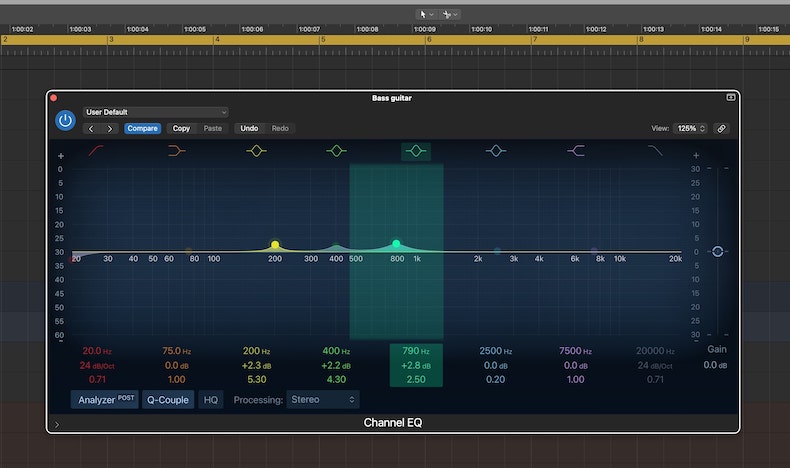

Low Cut
Added Body and Harmonics

Experiment with EQ Settings
As you work on your bass track, don’t hesitate to experiment with different EQ settings and frequencies. The key is to find the right balance that complements the rest of your mix, ultimately creating a cohesive and well-rounded sound.
Detailed Compression Settings for a Solid Bass Sound
Achieving a solid bass sound requires a deeper understanding of compression settings and how they interact with your instrument.
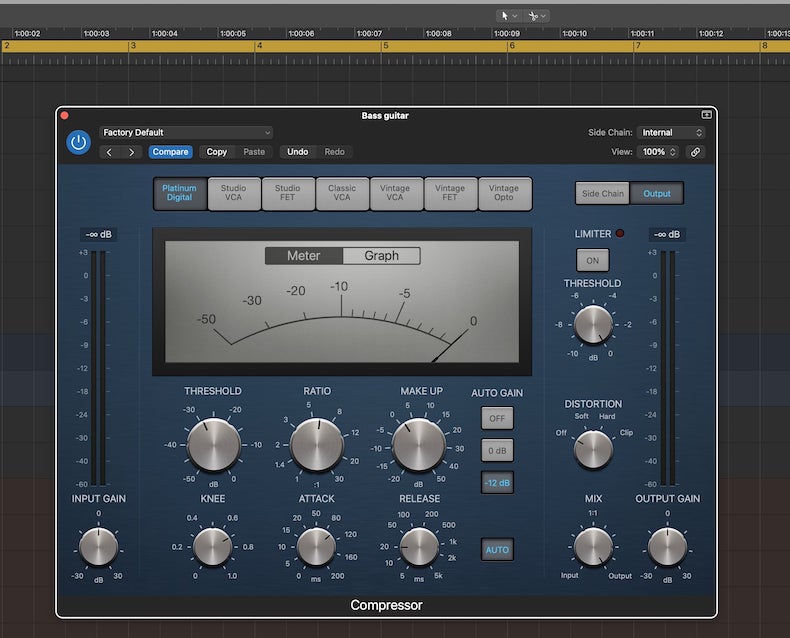
Compression Ratio
Attack and Release Times

Compressor Threshold
Makeup Gain

Experiment with the Compression Settings
Every mix is unique. The ideal compression settings may vary depending on your bass instrument and the desired sound. Experiment with different backgrounds and trust your ears as you work toward a solid and powerful bass sound.
Frequently Asked Questions
How much compression should I apply to my bass track?
How do I choose the proper compression ratio for my bass track?
What’s the difference between hard knee and soft knee compression settings?
What is parallel compression, and when should I use it?
How do I set my bass compressor’s attack and release times?
What is sidechain compression, and how can it help my bass mix?
Should I use a bass compressor pedal or a plugin for my bass track?
What is serial compression, and when should I use it?
How do I know if I’m using too much compression on my bass track?
Conclusion
Achieving the perfect bass mix is a delicate balance of art and science.
Understanding the fundamentals of bass compression, such as attack and release times, compression ratios, and the importance of EQ, is vital to creating a balanced and impactful mix.
Remember that every mix is unique, and the best way to find the sweet spot for your bass tone is through experimentation and trusting your ears.
Whether you’re working with a bass guitar, synth bass, or mixing electronic music, the techniques and tips discussed here will provide you with a solid foundation to build upon.
Now it’s time for you to take the next step and choose the best option for your music production needs.
Feel free to explore different compressors, settings, and techniques to create the powerful and dynamic bass sound that your mix deserves.